
What to Do If Your Solar Installer Goes Out of Business
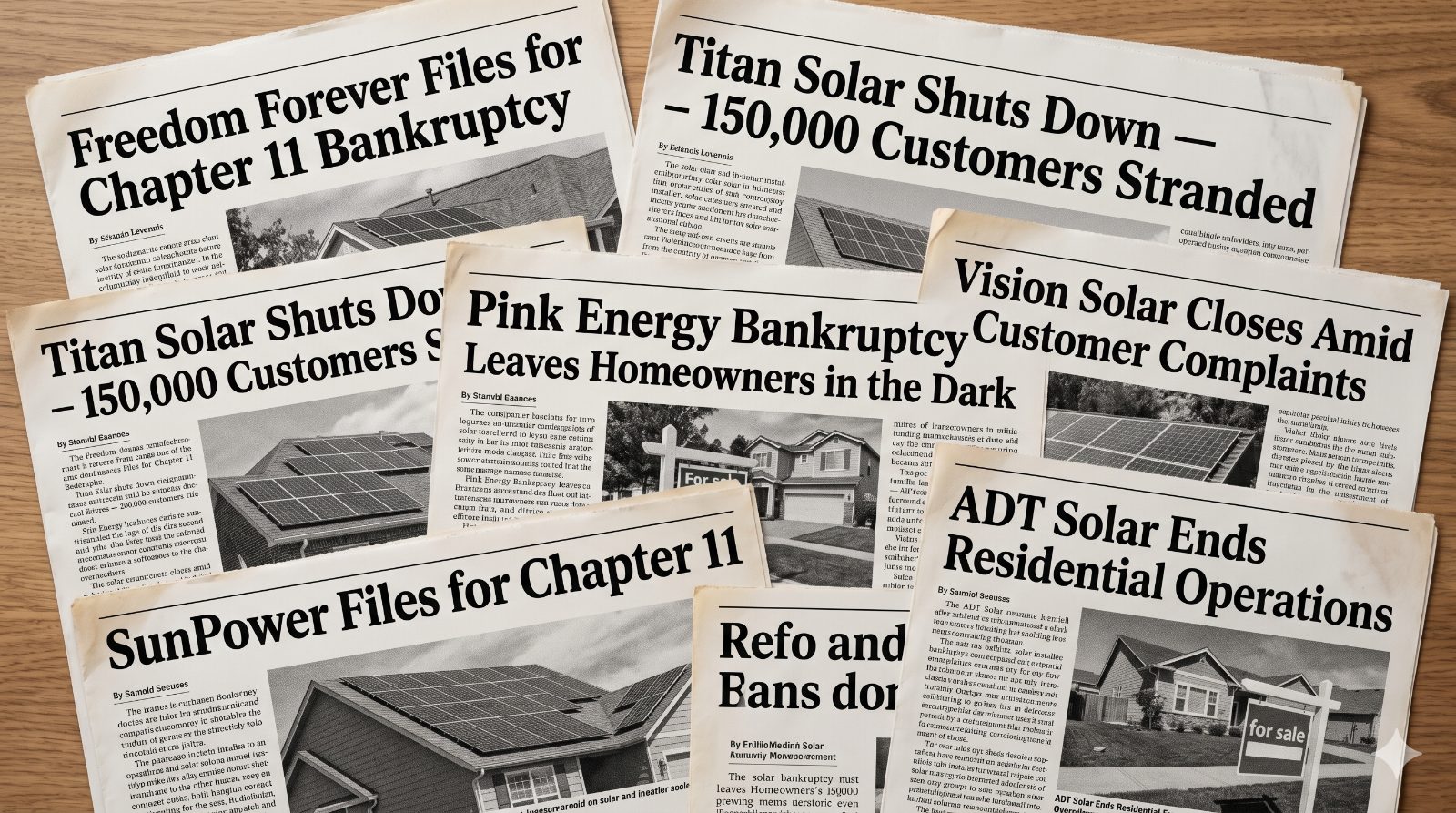
If your solar installer has shut down, filed for bankruptcy, or simply stopped answering the phone, take a breath. Your panels are still producing power on your roof right now, and you have more options than you might think. Here's what actually matters and what to do, step by step.
First, the good news:
When a solar installer goes out of business, the part that scares most people — "did I just lose my whole investment?" — is usually the part you don't need to worry about. Your solar panels keep working. They don't switch off because a company closed. And critically, your equipment warranties are issued by the manufacturers — companies like Enphase, SolarEdge, Tesla, and Q CELLS — not by your installer. Those warranties remain valid regardless of what happened to the company that installed your system.
What you may have lost is the workmanship warranty (the installer's promise to fix installation-related issues) and ongoing service and monitoring. Those are real gaps, but they're fixable. We actually have a plan for that.
Step 1: Find your paperwork
Dig out your original contract, your equipment list, and any monitoring login you were given. You're looking for three things: which company made your panels, which company made your inverter, and what monitoring platform your system uses (Enphase Enlighten and mySolarEdge are the most common). This information determines everything that comes next.
Step 2: Confirm your system is actually producing
This is where many orphaned homeowners get an unpleasant surprise. Without anyone monitoring the system, problems go unnoticed for months — and you only find out when your power bill creeps back up. Log into your monitoring portal if you have access. If you can't get in, or you've never had access, that's a sign you need someone to re-establish monitoring on your behalf.
Step 3: Check your warranty status
Contact the manufacturers of your panels and inverter directly to confirm your equipment is still under warranty. Most solar panels carry 25-30-year warranties, and inverters typically carry 10-25 years. The catch: when a manufacturer honors a warranty claim, they usually cover the replacement part only — not the labor to install it. With your original installer gone, you'll need a certified company to handle the physical work.
Step 4: Find a local company that services orphaned systems
This is the key move. You want a local, established installer who is certified for your equipment brand and who explicitly services systems they didn't install. Ask three questions: Are you certified for my equipment brand (ask to see the cert)? How long have you been in business locally? That last one matters — the whole reason you're in this situation is that a company disappeared. Look for roots.
Why local matters now more than ever
The companies leaving homeowners stranded are almost always large, multi-state operations that grew fast on aggressive sales and then collapsed when the market tightened. Local companies with deep community roots tend to be the ones still standing — and still answering the phone — years later.
At Southern Solar Monitoring, taking care of orphaned customers is what we do. We're certified across every major brand, we're based in GA, and we've been doing this for a while. If your installer is gone, we can pick up where they left off — starting with making sure your system is actually producing the way it should and getting more involved if repairs are needed.